JORDAN TRUONG/ AI ENGINEER
SECTION01 / INDEX

GOODYEAR, AZ · REMOTE (US)
HYBRID PHOENIX

BUILDS AGENTS THAT SHIP.

Jordan Truong, AI Engineer in Goodyear, AZ. Open to remote US roles or hybrid Phoenix.

Agentic engineering, built to written specs and gated by CI and evals before it ships.

Production agentic AI: multi-agent systems, RAG pipelines, and the infrastructure beneath them. Solo-built and run in daily production, end to end, from a terminal in Arizona.

The arc: twelve years a salon owner-operator. Then roughly four years in enterprise IT. Now AI engineering, shipping software that runs itself. Same instinct throughout: make the hard thing dependable.

The Résumé

SECTION02 / RÉSUMÉ20-SECOND SCAN · EVERY LINE PROVABLE

Core

Multi-agent orchestrationContext engineeringMCPRAG / GraphRAGLLM evalsGuardrails

Stack

PythonTypeScript / JavaScriptReactNext.jsNode.jsSQLPostgreSQLDocker

Domain

HIPAAPCI DSSNIST 800-53 / CSFLangfuseAWS BedrockGCP Vertex AI
2025 → PRESENTFounderBlu Print Solutions, LLClive demos
AUG 2024 → AUG 2026Customer Service Representative, Multi-CampaignValor Globalwalkthrough
FEB 2023 → APR 2024Service Desk Support AnalystMassage Envy (Corporate)detail
MAY 2022 → JAN 2023IT Support SpecialistAlorica (HMH + Dell campaigns)detail
OCT 2010 → MAR 2022Independent Business OwnerSelf-Employedthe arc

Also live and provable: /opsLangfuse-traced cost dashboard with per-request pricing · Anthropic Academy ×16, Claude Partner — Claude Code, and Google AI Professional Certificate.

Every role above links to a live demo or a full walkthrough.Same content as a 2-page PDF ↓

Experience

SECTION03 / TIMELINE
2025 → NOW
Founder & AI EngineerBlu Print Solutions

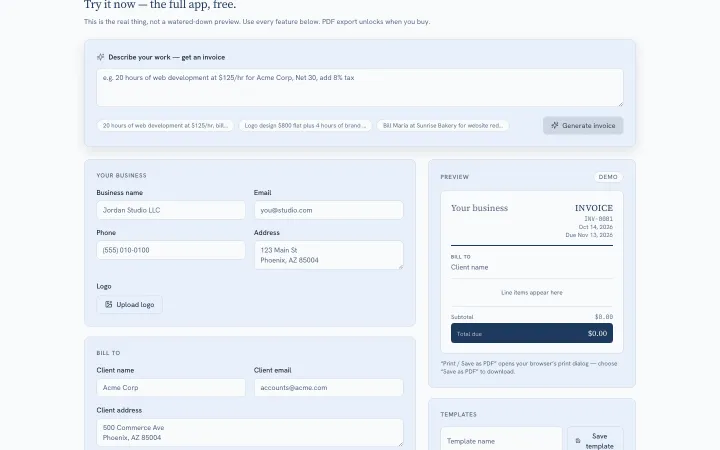
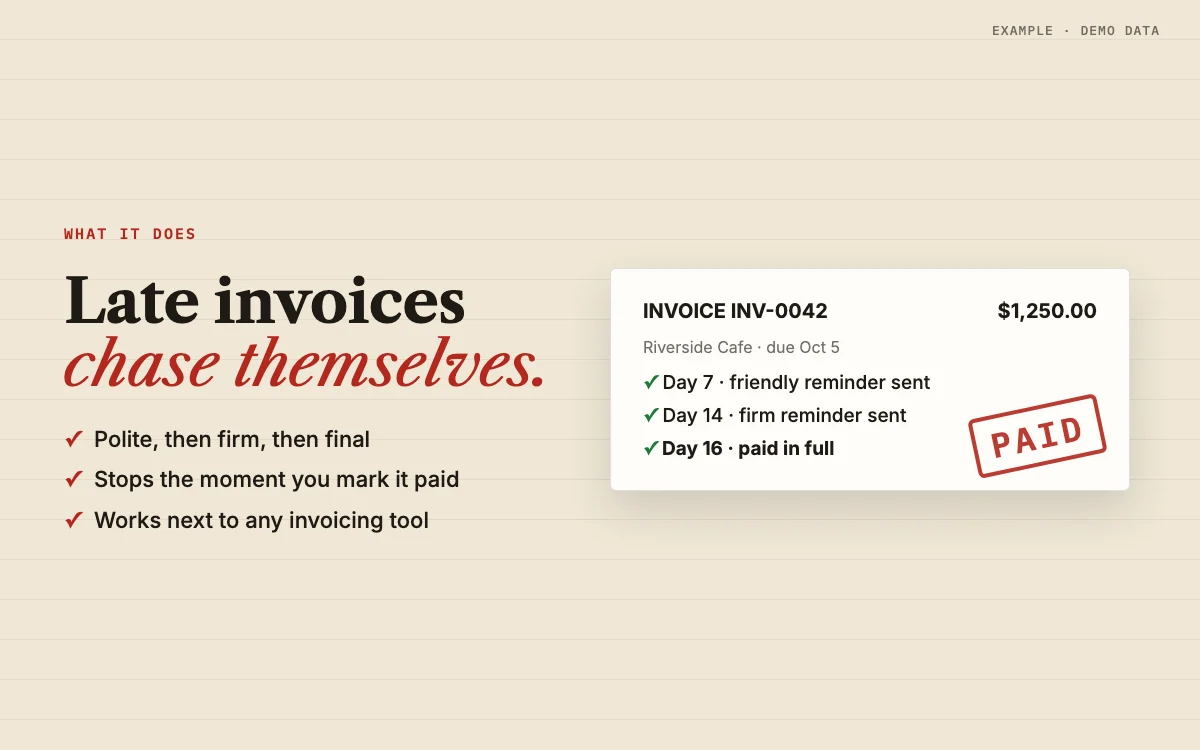
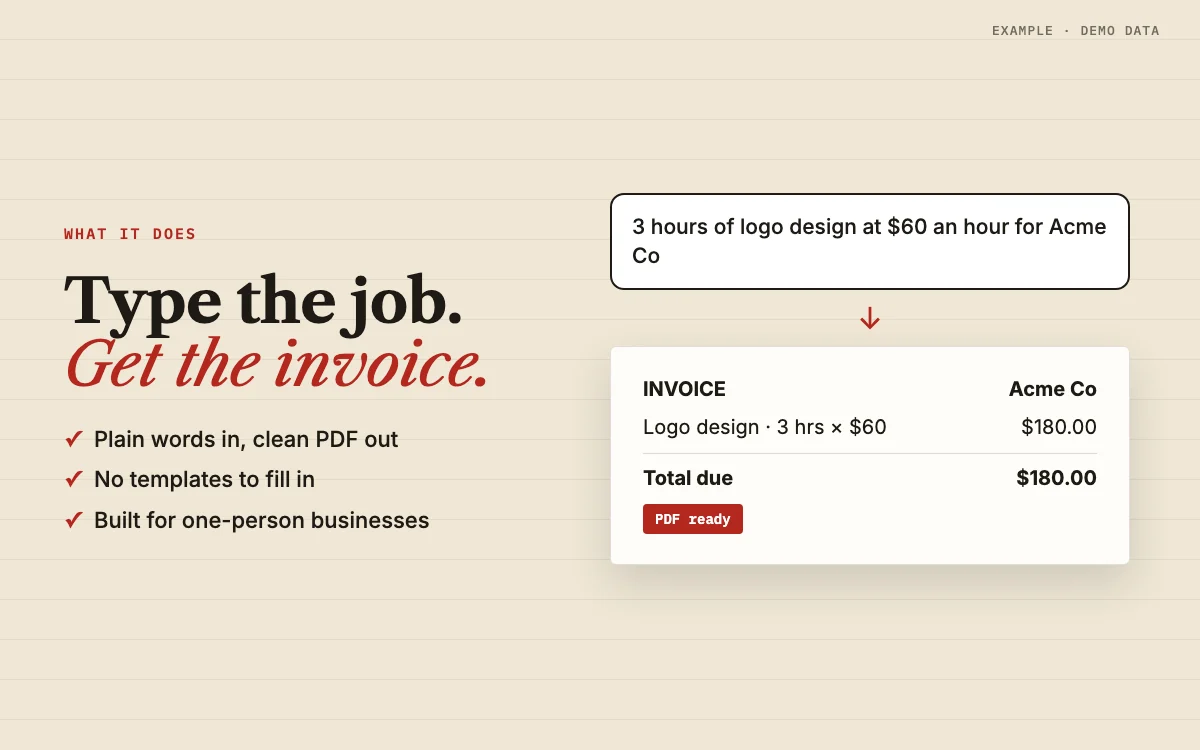
Solo-built multi-agent VPS, SoloInvoice SaaS, RCM knowledge assistant. All in production.

MCPRAGGraphRAGMulti-agentSaaS
2024 → AUG 2026
Customer Service Representative — Multi-CampaignValor Global

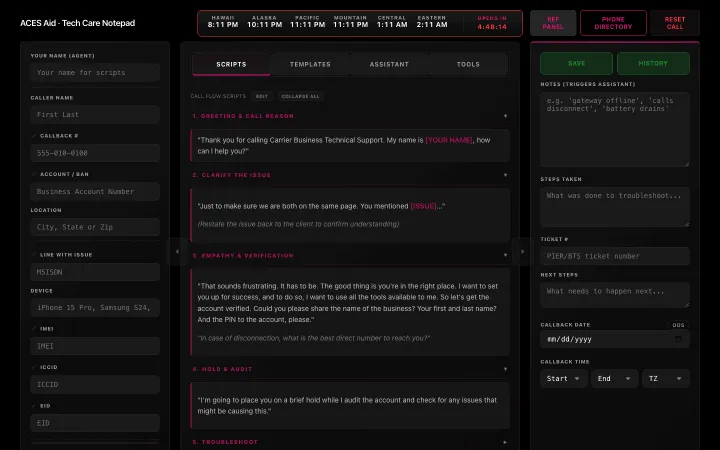
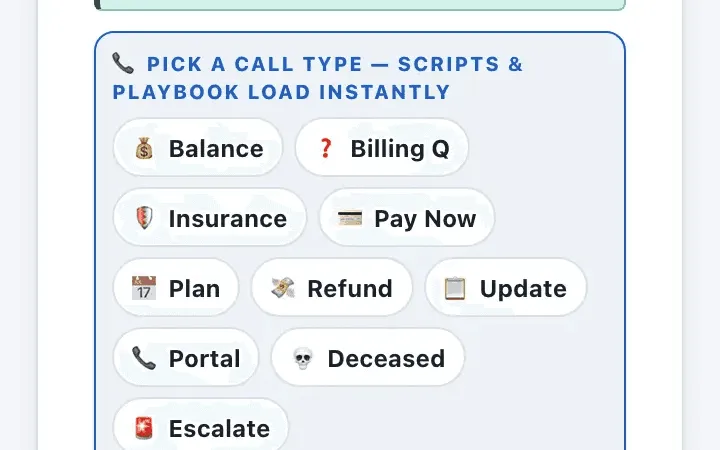
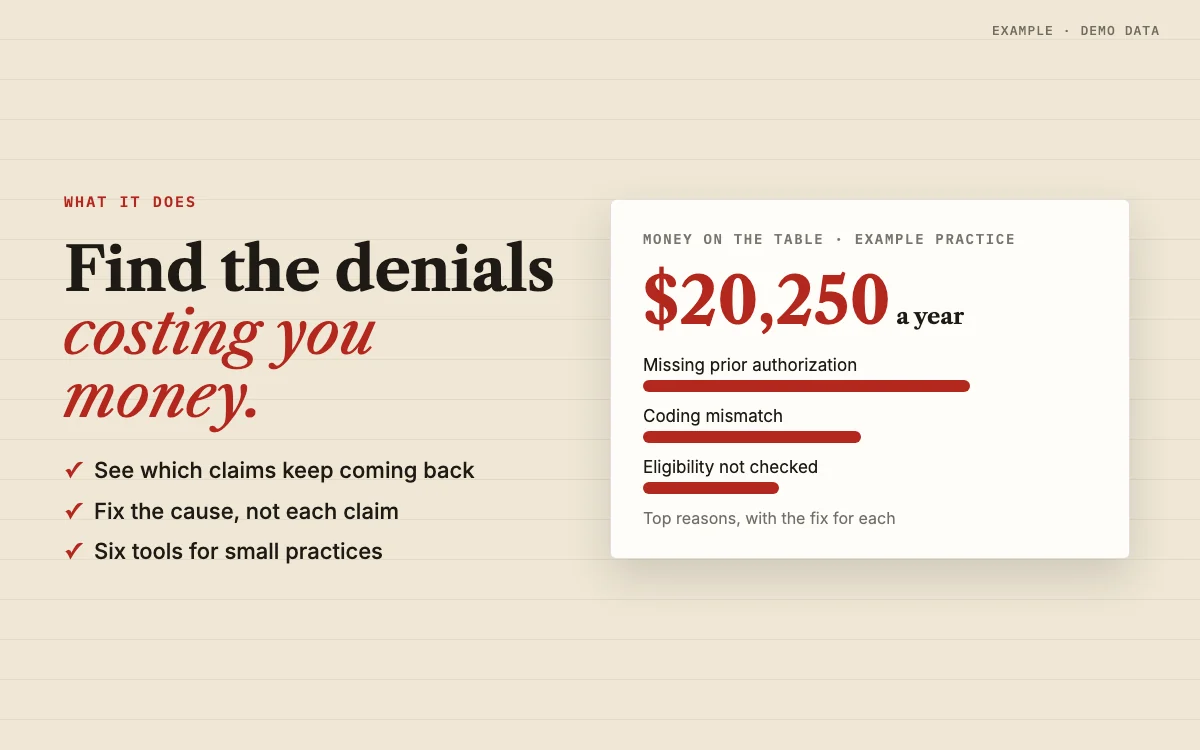
Built production AI tooling across two enterprise campaigns: HIPAA RCM copilot (every scenario audited, 72 KB-grounded scripts, 27 RPM playbooks, 41 canned-note codes) and ACES Aid (162 flows, floor-wide adoption, 1,500+ indexed keywords). Both in daily floor use.

HIPAAAgentic flowsEvalsRCM
2023 → 2024
Service Desk Support AnalystMassage Envy (Corporate)

Managed provisioning across 1,000+ franchise locations. Led network/security audits with firmware rollouts sequenced across timezone waves.

ITServiceNowInfrastructure
2022 → 2023
IT Support Specialist — Multi-CampaignAlorica

Two enterprise campaigns: HMH education software (app/account triage, escalation) and Dell Technologies (hardware diagnostics via Zendesk, live Teams collaboration with senior techs, warranty logistics).

IT SupportZendeskSLA
2010 → 2022
Owner-OperatorSelf-Employed

Twelve years running a service business end-to-end: hiring, payroll, scheduling, the P&L.

OperationsP&LPeople management

The Work

SECTION04 / RECEIPTS
01FLAGSHIP · PYPI · MIT · OSS

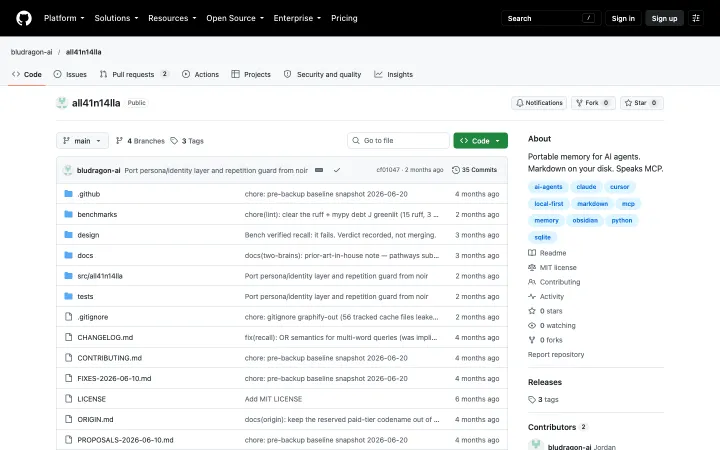
all41n14lla

Open-source MCP memory server. One command to install: pip install all41n14lla. A 90-test suite runs green in CI across Python 3.11 through 3.14.

markdownon your diskSQLite + FTS5local indexMCP serverstdioevery clientClaude · Codexmemory you can read, grep, git, and prove you deleted
  • MCP server
  • 90 tests · CI green
  • Py 3.11–3.14
  • MIT license
Python · MCP · PyPIOpen repo
02● 10 · PRODUCTION

The Builds

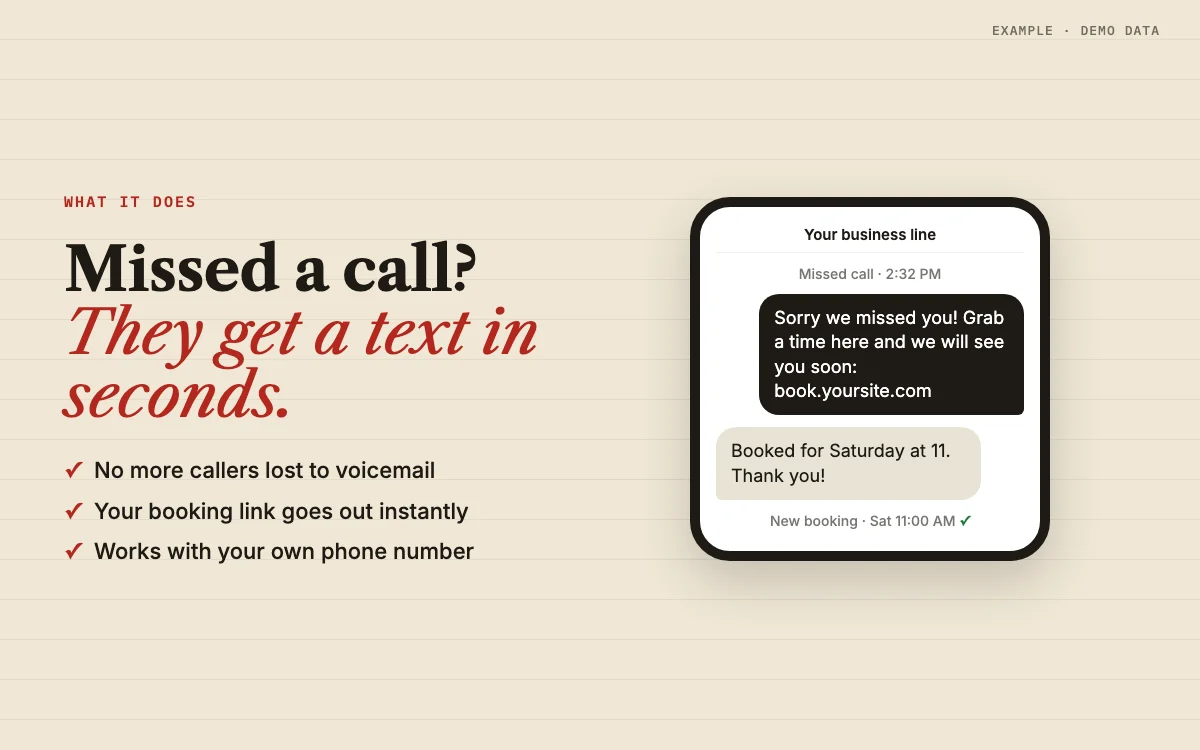
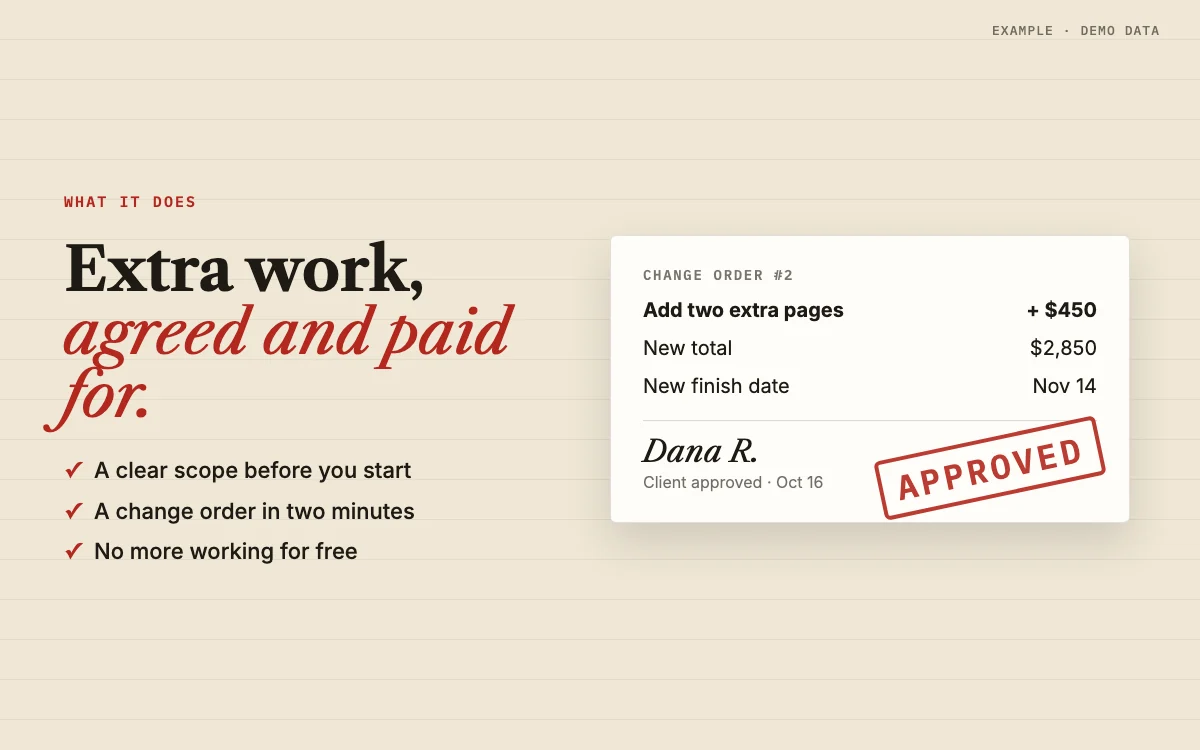
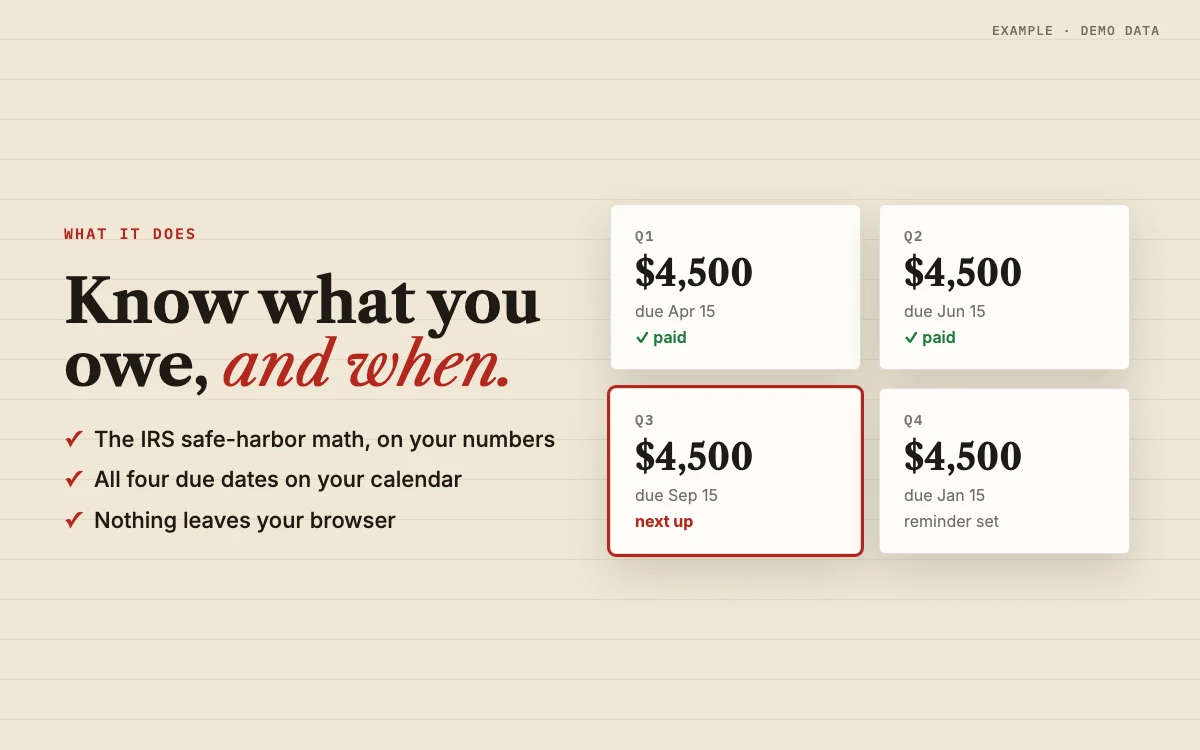
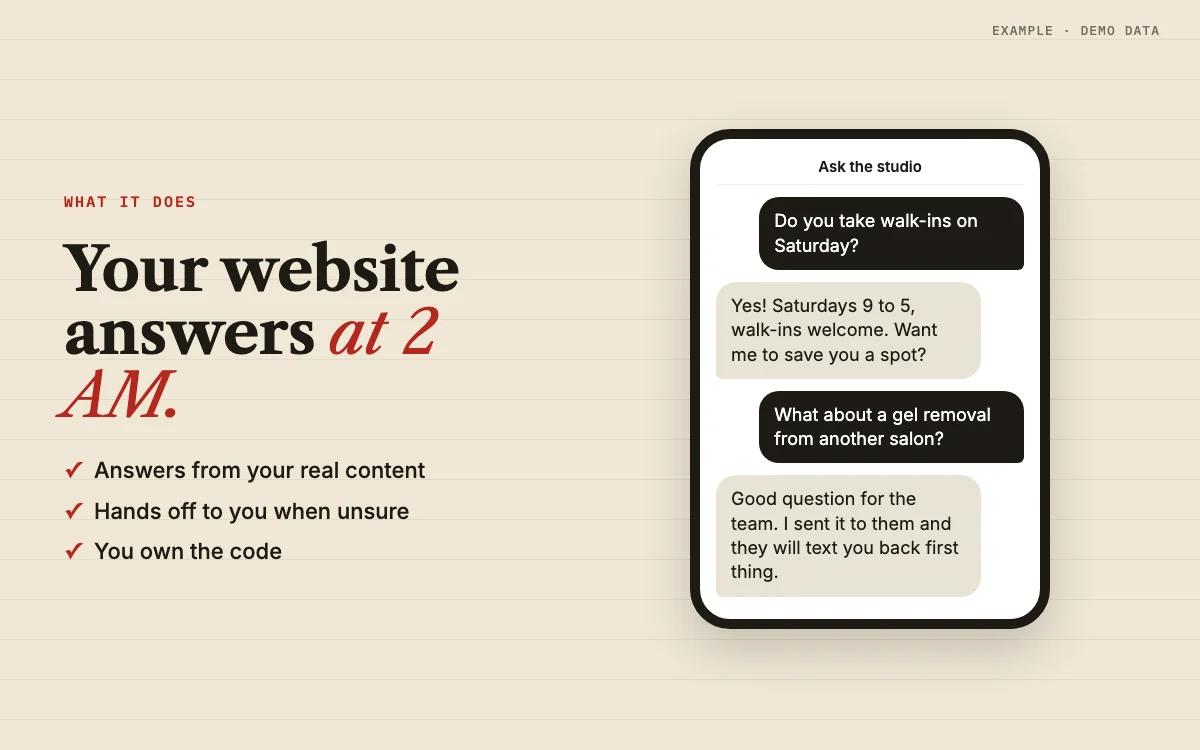
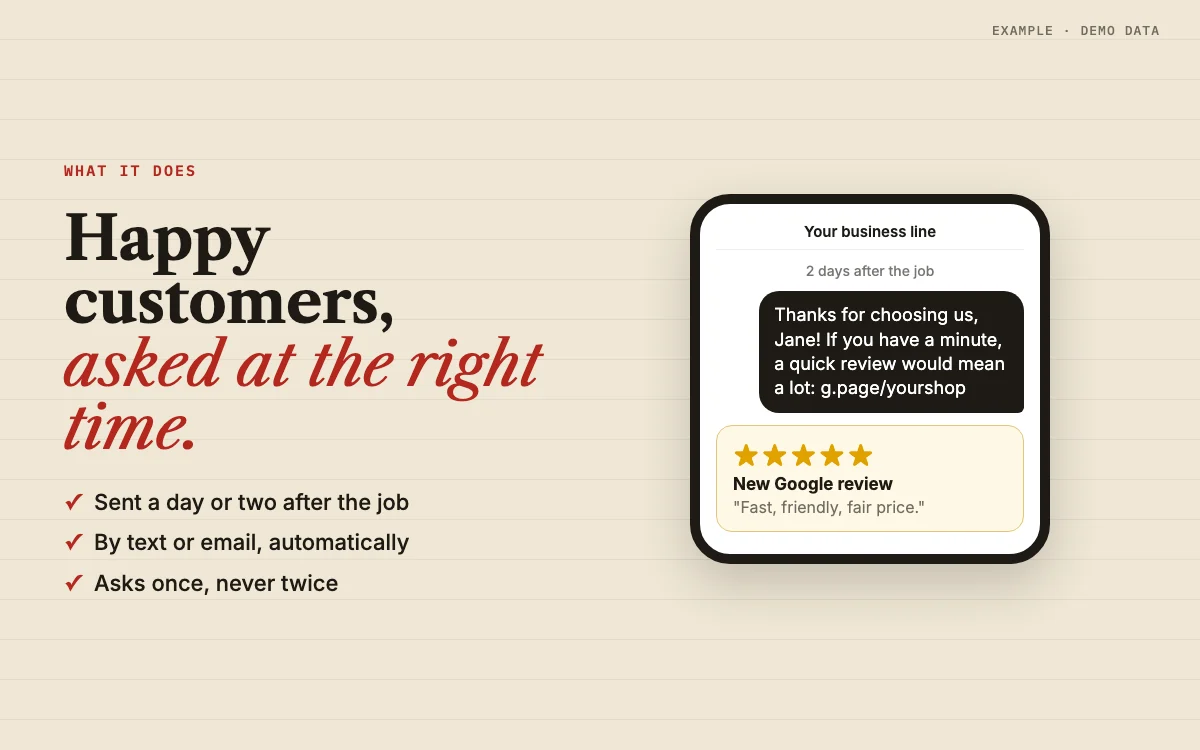
Ten agentic systems in daily production: healthcare + telecom copilots (every scenario audited, 162 flows), five in-browser demos (RAG, SQL, email triage, agent orchestration, semantic layer), SaaS with offline licensing, a 7-agent outreach engine, and the platform wiring all of it. Tap to browse.

copilots2 verticals5 demosin-browserSaaSoffline keysoutreach7 agentsplatformthe wiringten systems, one operator, all in daily production
  • Healthcare + Telecom AI · 2
  • In-browser agents · 5
  • SaaS + ed25519
  • Agency Engine
Python · Claude · Next.js · GroqBrowse all
03HARNESS / INFRASTRUCTURE

The 90% — Harness Architecture

Fifty-plus skills loaded on demand, fifteen MCP servers, auto-memory across sessions, and layered guardrails. The model is 10% of the system. The harness is the other 90%.

guardrailslayeredMCP servers15skills50+, on demandmemoryacross sessionsinstructionsspecs · voice · lawsthe model10%the model is the small box; everything above it is the system
  • 50+ skills on demand
  • 15 MCP servers
  • Layered guardrails
  • Cross-session memory
Instructions · Memory · GuardrailsRead
04WIP · SALON NICHE

THE AGENCY ENGINE

Scout finds the lead, Diagnoser maps the gap, Builder ships the fix, Filmer records the walkthrough, Checker validates it, and Pitcher sends the note. No staff and no retainer, at about $0.10 a lead.

ScoutfindsDiagnosermapsBuildershipsFilmerrecordsCheckervalidatesPitchersendsone human step: payment
PROBLEM
Salons have no web presence and no time to fix it. Manual agencies charge $5K+ per client for work that's 80% repetitive.
SOLUTION
7 agents chain: Scout → Diagnose → Build → Film → Check → Pitch. The only human step is payment.
WHY BEST
Hundreds of targeted, compliant campaigns for under a dollar a lead, which only works when the agents are chained together.
  • Scout → Film → Pitch
  • $0.10/lead · zero staff
  • CAN-SPAM compliant
  • ~$10/mo ops cost
Python · 7 Agents · LLM router · VercelBUILDING

Try It Live

SECTION05 / DEMOS

Or open the chat bubble (bottom-right) to ask me anything.

Every demo ships through typecheck, eval, and prompt-regression gates on every commit. You can watch the guardrails work: RAG declines instead of guessing, the Critic rejects unsupported claims, the semantic layer refuses metrics that are not in its catalog.

LORA FINE-TUNE · $0 · ON-DEVICE

One experiment that lost to prompting. Published anyway.

Fine-tuned Qwen2.5-0.5B locally on 8 examples from this site's own content, testing whether it could drop the ~190-line system prompt the live chatbot runs on. It couldn't. Real transcript from the eval run:

Q: "What is all41n14lla?"

Base model + system prompt (correct): "An open-source MCP memory server for AI agents, maintained by Jordan Truong, published on PyPI and GitHub."

Fine-tuned, no prompt (hallucinated): "...a web application for managing all 41 million users of the Netflix app..."

DEEP DIVE · 40 MIN

AI hosts break down my work through the lens of Google's New SDLC.

LOADING...

The Arc

SECTION06 / STORY
2014THE FLOOR

Twelve years on the floor.

Owner-operator of a salon and beauty business. Scheduling, payroll, inventory, hiring, client experience, all of it. The job taught systems thinking before I had a name for it: every constraint is a design problem, every bottleneck is a process failure waiting to be solved.

2022THE SWITCH

Pivot to enterprise IT.

Joined the workforce-management tech stack at scale. Claims processing, healthcare RCM, multi-team ops coordination. Learned what large-system reliability actually means when a misconfigured rule costs someone a reimbursement. Then LLMs became capable enough to matter.

2026● NOW · THE BUILD

Building AI that runs itself.

Shipped a PyPI MCP server, a live RAG+GraphRAG knowledge assistant, a multi-agent VPS brain, and a licensed SaaS product, all of it solo and all of it in production. The plan is to keep shipping until the systems are earning while I sleep.

Stack

SECTION07 / TOOLS

AI & Agents

  • Multi-agent orchestration
  • RAG / GraphRAG
  • MCP (Model Context Protocol)
  • Prompt engineering
  • Eval frameworks
  • Guardrails & abstention
  • Prompt-injection defense
  • Cost routing

Models & Cloud

  • Claude (Anthropic)
  • Gemini (Google)
  • GPT-4o (OpenAI)
  • Groq (Llama 3)
  • Perplexity (search)
  • Google Cloud / Vertex
  • Vercel Edge
  • VPS (Debian + systemd)

Build

  • Python 3.11–3.14
  • TypeScript / Node.js
  • React 19 + Vite
  • Next.js 15
  • FastAPI
  • PostgreSQL / Supabase
  • HelixDB (graph)
  • Stripe / webhooks

Certs & Security

  • Anthropic Academy (16 certs)
  • Google AI Professional Cert
  • CompTIA Security+ (active)
  • CompTIA A+ (active)
  • HIPAA compliance
  • NIST 800-53 controls
  • ed25519 offline licensing
  • Zero-PHI architecture

What Actually Runs This Site

SECTION08 / SYSTEM MAP

One diagram, drawn from the code on the day this was written. Two entry points, one shared trust boundary, and three honesty tiers on every demo answer.

VISITORjordantruong.comCHAT WIDGETapi/chat.jsIts own 6-layer defense1. keyword screen2. canary token3. fingerprint check4. anti-extraction5. online scoring6. adversarial taggingIts own system, separate from abuseGuard, for the one route that is always onGroqLlama 3.3 70B/demos.html5 demosapi/demos/{rag,sql,email,agents,semantic}.jsabuseGuard on all 5live · precomputed · client-retrievalSHARED TRUST BOUNDARYSupabaseRAG vectors + demo rate limitsLangfusetraces every model call, both paths
VERIFIED IN CODE, SAME SESSION

What this system is NOT: no PHI, no real user accounts, no payment data. The HIPAA-safe tool built at Valor is a separate system and is not shown here.

The Calls

SECTION09 / TRADEOFFS

Five decisions from the systems above, with the cost attached. Anyone can list what they shipped. These are the choices that had a price, including the ones that cost me something.

01

The model picks the metric. It never writes the query.

CONSTRAINT
Natural-language questions over real business data. A confidently wrong number is worse than no answer, and every answer has to be explainable afterward.
OPTIONS
Let the model write SQL and validate it · let it write SQL against a restricted view · publish a fixed metric catalog and let the model only choose from it.
CHOSE
The catalog. A validator can only reject SQL it anticipated; a generator that cannot produce arbitrary SQL has no unanticipated output to reject. The model is reduced to a classification problem and a deterministic compiler emits the query.
COST
Open-ended questions are gone for good. Anything outside the catalog cannot be asked at all. I took a real product limitation over ever being confidently wrong. The catalog is also a maintenance surface: every new question means a new entry.
REVISIT WHEN
Catalog coverage becomes the top complaint. The honest next move is the restricted view behind row-level security, and it would sit beside this rule rather than loosen it.
IN CODE
src/demos/lib/semantic-layer.ts · api/demos/semantic.js
02

I fine-tuned a model, it lost to prompting, and I published that.

CONSTRAINT
The chatbot needed tighter persona adherence. Whether that is a training problem or a prompting problem was genuinely unknown, which is exactly when people guess.
OPTIONS
LoRA fine-tune a local model · better prompting plus retrieval · move to a larger hosted model and pay for it.
CHOSE
Measure first. I built the dataset, ran the training, and evaluated before and after against the prompting baseline. Prompting won, so the fine-tune did not ship.
COST
Real time spent on a model that never shipped. I traded it for a measured number instead of an opinion. Shipping the fine-tune because I had already paid for it would have been the more expensive mistake.
REVISIT WHEN
When volume makes per-token cost dominate quality. A small tuned model competing on economics is a different question than one competing on quality, and I only answered the second.
IN CODE
fine-tune/train_lora.py · eval_before_after.py · eval_results.json
03

Fail open on structure. Never fail open on content.

CONSTRAINT
A Researcher → Writer → Critic pipeline where the Critic fact-checks the draft. It must always terminate, and it must not pass an unsupported claim. Those pull in opposite directions.
OPTIONS
Retry until the response parses · hard-fail the run on any malformed response · split the two and treat them differently.
CHOSE
Split them. A malformed envelope is accepted and the run continues; an unsupported claim forces a revision round, capped at two. Being strict about JSON shape buys nothing here. Being strict about claims is the whole point.
COST
The cap is a real hole: a claim that survives two rounds ships. I took a bounded, known error rate over an unbounded loop, because "sometimes it never finishes" is the worse failure in something a stranger clicks once.
REVISIT WHEN
When revision rounds start hitting the cap regularly. That means the Critic is fighting the Writer’s prompt, and the fix belongs upstream in that prompt. Raising the cap would only hide it.
IN CODE
src/demos/lib/orchestrator.ts
04

Every demo degrades honestly, and says which tier answered.

CONSTRAINT
A demo is opened once, by a stranger, on a phone, with no API key, and gets exactly one chance. It must never show an error screen, and it must never quietly fake a live result.
OPTIONS
Require keys and show most visitors nothing · ship canned responses styled as live · run three real tiers and label which one answered.
CHOSE
Three real tiers with a source badge on every answer: live, precomputed, client-retrieval. The SQL demo runs genuine SQLite in WebAssembly; retrieval runs real client-side search over a bundled corpus.
COST
Three code paths and three sets of tests instead of one, and I tell visitors when they are seeing the cheap tier. That is worse marketing and better engineering, and I will take that trade.
REVISIT WHEN
Never, for a portfolio. In a paid product the tiers stay and the badge becomes an internal signal instead of user-facing chrome.
IN CODE
src/demos/lib/types.ts · retriever.ts · sqljs-loader.ts
05

A public model endpoint is an untrusted input surface. Including mine.

CONSTRAINT
A chatbot on a personal domain, open to anyone, wired to a paid model API. That makes it a prompt-injection target, a cost-exhaustion target, and a data-extraction target all at once.
OPTIONS
Rate-limit at the edge and trust the prompt · layered defense at the application boundary with an abuse guard on every route that reaches a model.
CHOSE
The layered defense. The interesting part is the miss. A review pass found the guard wired into some model routes and not into three others, including the live retrieval route already in production. The design was right; the wiring was incomplete.
COST
Latency on every request and false positives on legitimately odd questions. More honestly: a layered design created a false sense of coverage, because "we have a defense" is not the claim "it is attached to every path."
REVISIT WHEN
Every time a new route reaches a model. New routes are the trigger. A calendar reminder would miss the point. The guard is now a route-level requirement rather than a component you remember to call.
IN CODE
api/chat.js · api/rag-search.js · api/demos/*.js
SECTION10 / CONTACT

LET'S BUILD SOMETHING THAT SHIPS.

JORDAN TRUONG/ AI ENGINEEREvery system here was built solo and runs in production.
© 2026 Jordan Truong